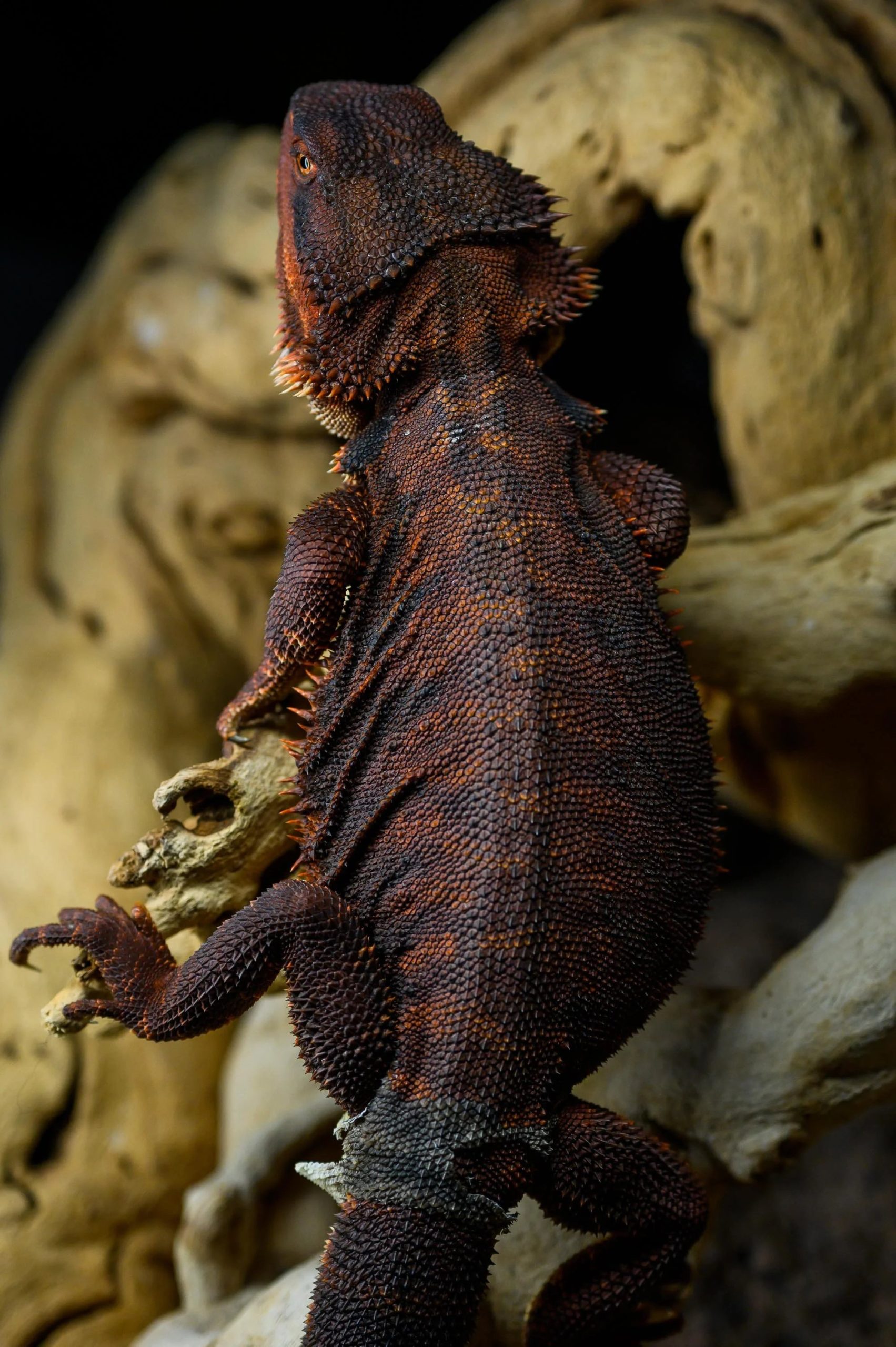

The black bearded dragon, a rare and mysterious reptile, often leaves enthusiasts intrigued. Originating from the desolate Australian outback, its ebony scales glisten under the scorching sun. With piercing amber eyes that seem to hold ancient secrets, the black bearded dragon stands out among its colorful counterparts. Its jet-black appearance serves as the perfect camouflage in the harsh, sun-scorched landscapes, making it a master of disguise. As the sun sets and the desert cools, the black bearded dragon emerges, a shadowy figure against the fading light, captivating all who are fortunate enough to witness its beauty.

The Fascinating World of the Black Bearded Dragon
Welcome, young explorers, to the mysterious world of the black bearded dragon! You may have heard of bearded dragons before, but did you know that there is a special kind that comes in a striking black color? Join me on this exciting journey as we delve into the unique features, behavior, habitat, and care of these incredible creatures.
What Makes the Black Bearded Dragon Special?
The black bearded dragon, also known as Pogona vitticeps, is a captivating reptile that stands out from its more common counterparts due to its stunning dark coloration. While most bearded dragons have a range of colors from tan to red, the black bearded dragon boasts a deep black hue that sets it apart in the reptilian world.
One of the most fascinating aspects of the black bearded dragon is its ability to change color based on its mood and environment. When they are calm and relaxed, their black coloration may appear more intense, but when they are feeling threatened or stressed, they may display lighter patches or even shades of grey or brown.
Exploring the Habitat of the Black Bearded Dragon
Black bearded dragons are native to the arid regions of Australia, where they thrive in desert-like environments with plenty of rocks, sand, and sparse vegetation. These reptiles are well-adapted to the harsh conditions of their natural habitat, using their keen sense of sight and smell to hunt for food and avoid predators.
When kept as pets, black bearded dragons require a habitat that mimics their natural surroundings. A spacious terrarium with plenty of hiding spots, basking areas, and UVB lighting is essential for their health and well-being. Make sure to provide a variety of substrates for burrowing and climbing, as well as a shallow water dish for drinking and soaking.
Understanding the Behavior of Black Bearded Dragons
Black bearded dragons are known for their docile nature and curious demeanor, making them popular pets for reptile enthusiasts of all ages. These reptiles are diurnal, meaning they are most active during the day and spend their nights resting or basking under heat lamps.
One of the most striking behaviors of the black bearded dragon is its characteristic “beard display.” When threatened or agitated, these reptiles puff out their throat regions to create a black, spiky beard, making themselves appear larger and more intimidating to potential predators.
Feeding and Nutrition
Proper nutrition is crucial for the health and happiness of your black bearded dragon. In the wild, these reptiles are omnivores, feeding on a diet of insects, leafy greens, and the occasional small mammal. When kept in captivity, it is important to provide a balanced diet that includes a variety of live insects such as crickets, mealworms, and dubia roaches, as well as fresh vegetables like collard greens, squash, and bell peppers.
Remember to dust your black bearded dragon’s food with a calcium supplement to ensure they are getting all the necessary nutrients for strong bones and overall well-being. Providing a shallow dish of water for drinking and occasional soaking is also essential to prevent dehydration.
Handling and Care Tips
When it comes to handling your black bearded dragon, it is important to approach them gently and with confidence. These reptiles can become accustomed to human interaction, but it is essential to respect their boundaries and allow them to retreat to their hiding spots if they feel overwhelmed.
Regularly cleaning and maintaining your black bearded dragon’s habitat is crucial for their health. Remove any uneaten food, feces, and shed skin promptly to prevent bacterial growth and odor. Keep a close eye on the temperature and humidity levels in their enclosure to ensure they are within the optimal range for your pet’s well-being.
The Importance of Conservation
As with many species of reptiles, black bearded dragons face threats in the wild from habitat loss, climate change, and human activities. It is essential for us to learn about these remarkable creatures and take steps to protect them and their natural habitats for future generations to enjoy.
By raising awareness, supporting conservation efforts, and adopting responsible pet ownership practices, we can all contribute to the preservation of the black bearded dragon and other endangered species around the world.
So, young adventurers, the next time you come across a black bearded dragon in your studies or travels, remember the amazing qualities and fascinating facts that make these reptiles truly special. Let’s work together to ensure a bright future for these incredible creatures and the diverse ecosystems they call home.
You wont believe what this lizard did!😱 Bearded Dragon Behavior
Frequently Asked Questions
What are the distinguishing features of a black bearded dragon?
Black bearded dragons, also known as melanistic bearded dragons, have a predominantly black coloration, which sets them apart from the typical yellow or tan hues of regular bearded dragons. Their scales may have a shiny iridescence, adding to their unique appearance.
Do black bearded dragons require different care than regular bearded dragons?
While black bearded dragons do not have different care requirements in terms of diet or habitat compared to regular bearded dragons, they may need slightly higher temperatures to maintain their dark coloration. It is essential to provide a proper basking spot and UVB lighting to ensure their overall health and well-being.
How can I differentiate between a black bearded dragon and a bearded dragon with normal colors?
One of the most apparent ways to differentiate a black bearded dragon from a regular one is by observing their color. Black bearded dragons have a significantly darker and blackish hue, while typical bearded dragons exhibit shades of yellow, tan, or red. Additionally, the iridescent sheen on the scales of black bearded dragons is another distinguishing feature.
Final Thoughts
In conclusion, the black bearded dragon is a fascinating reptile known for its unique appearance and behavior. Their striking black coloration sets them apart from other bearded dragon species. Despite their intimidating look, they are docile pets when well-cared for. With proper care and attention, the black bearded dragon can thrive in captivity and make a wonderful addition to any reptile lover’s collection.