
Across Kenya’s financial system, change is no longer gradual. It is visible, structural, and operational. Institutions are rebuilding how transactions move, how risk is calculated, plus how customers interact with services that were once rigid, slow, and heavily manual. Systems now prioritize speed, traceability, alongside measurable performance under pressure.
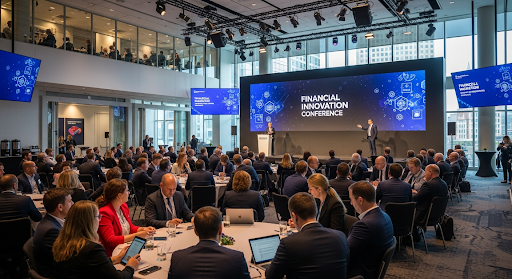
Within this evolving structure, coordination has become unavoidable. No bank, no fintech firm, no regulator operates independently anymore. Toward the center of this shift sits the banking exhibition in Kenya, acting as a controlled environment where stakeholders examine technologies, question deployment logic, plus observe how systems perform before committing to full-scale adoption.
The Role of Industry Platforms in Financial Transformation
Inside these industry platforms, decision-making compresses. Time shortens. Instead of relying on reports or second-hand analysis, stakeholders interact directly with systems, assess functionality under realistic scenarios, alongside question providers in real time, which removes layers of assumption from the evaluation process.
Beyond direct interaction, regulatory clarity becomes sharper in such environments. Financial systems operate under strict frameworks. That remains constant. Through focused discussions, expert sessions, plus structured exchanges, institutions understand how innovation fits within compliance requirements without disrupting operational continuity.
Understanding the Strategic Value of Banking Exhibitions
At a practical level, exhibitions function as evaluation grounds. Not display zones. Solutions are not simply presented; they are tested, questioned, alongside compared against operational realities, which allows institutions to identify what actually works within their infrastructure rather than what appears viable on paper.
At the same time, cross-sector interaction introduces another layer of insight. Financial services intersect with cybersecurity, telecommunications, plus data infrastructure. When these sectors converge in one space, dependencies become visible, alongside opportunities that rarely surface within isolated organizational environments.
Exposure to Scalable Digital Infrastructure
Across expanding financial operations, scalability defines long-term viability. Systems must handle volume spikes without failure. Exhibitions provide access to infrastructure designed for such demands, allowing institutions to evaluate resilience, throughput capacity, alongside system behavior under sustained load conditions.
Real-Time Demonstration of Financial Technologies
During live demonstrations, theory disappears. Execution takes over. Institutions observe workflows, test response times, alongside identify integration friction points instantly, which gives a clearer understanding of how solutions perform beyond technical documentation.
Key Themes Driving Kenya’s Financial Sector Discussions
At the center of current discussions, operational efficiency remains dominant. Institutions are not experimenting blindly. They are optimizing processes. Backend systems are streamlined, while user-facing interfaces are refined to ensure consistent service delivery across digital platforms, physical touchpoints, plus hybrid channels.
At the same time, financial inclusion continues to influence strategic priorities. Access gaps still exist across different regions. Solutions are being designed to address these gaps through mobile-first systems, agent-driven models, alongside simplified onboarding processes that reduce barriers without compromising compliance.
Integration of Fintech Capabilities
Through targeted collaboration, banks integrate fintech solutions without dismantling existing infrastructure. This approach allows gradual enhancement. Systems evolve step by step, combining new capabilities with legacy frameworks, alongside maintaining operational stability during transition phases.
Strengthening Data Security and Compliance
Under increasing digital activity, security becomes embedded within system design rather than added later. Financial institutions implement frameworks that protect data integrity, ensure compliance alignment, alongside provide visibility into transactional activity without slowing down operations.
Operational Challenges and Practical Solutions
Despite ongoing transformation, structural challenges remain. Legacy systems still limit flexibility. They cannot be replaced overnight. Financial institutions must balance modernization with uninterrupted service delivery, which creates demand for adaptable solutions that integrate rather than disrupt.
Interoperability adds another layer of complexity. Systems must communicate seamlessly across platforms, across institutions, alongside across regulatory boundaries. Without standardized protocols, fragmentation increases, leading to inefficiencies that directly impact service delivery and operational coordination.
Bridging Legacy Systems with Modern Platforms
During transition periods, hybrid models become essential. Institutions adopt solutions that enable gradual migration, allowing legacy systems to coexist with modern platforms while maintaining service continuity and reducing operational risk.
Enhancing Customer-Centric Service Models
From the customer’s standpoint, expectations have shifted significantly. Speed is assumed. Transparency is expected. Financial institutions respond by implementing systems that reduce delays, improve clarity, alongside ensure consistent experiences regardless of how services are accessed.
Collaboration as a Driver of Sustainable Growth
Across the financial ecosystem, collaboration defines progress. No single entity can drive transformation alone. Banks, regulators, technology providers, alongside service firms must operate within a coordinated framework that supports both innovation and stability.
Why does collaboration hold such weight here? Because isolated innovation collapses under regulatory pressure, operational complexity, alongside scalability constraints. Industry platforms provide structured environments where partnerships form, evolve, plus extend into long-term strategic initiatives that influence sector-wide development.
Building Long-Term Industry Partnerships
Through repeated interaction, institutions identify partners aligned with their operational goals. These relationships extend beyond single engagements, contributing to more efficient implementation cycles alongside continuous system improvement.
Aligning Innovation with Regulatory Frameworks
Within regulated environments, innovation must align with existing policies. Solutions are evaluated not only for capability but also for compliance compatibility, ensuring that technological advancement operates within established financial governance structures.
Final Thoughts
Decisions in banking are shifting toward real-world validation, not assumptions. Within this context, WFIS 2026 – Kenya operates as a focused industry platform where financial institutions, technology providers, plus regulatory stakeholders engage directly, assess systems, alongside evaluate deployment pathways without unnecessary abstraction.
Through this environment, it supports organizations navigating transformation by connecting them with relevant technologies, practical insights, plus actionable direction, offering a clear route toward identifying the right banking solution in Kenya while maintaining alignment with compliance and scalability.